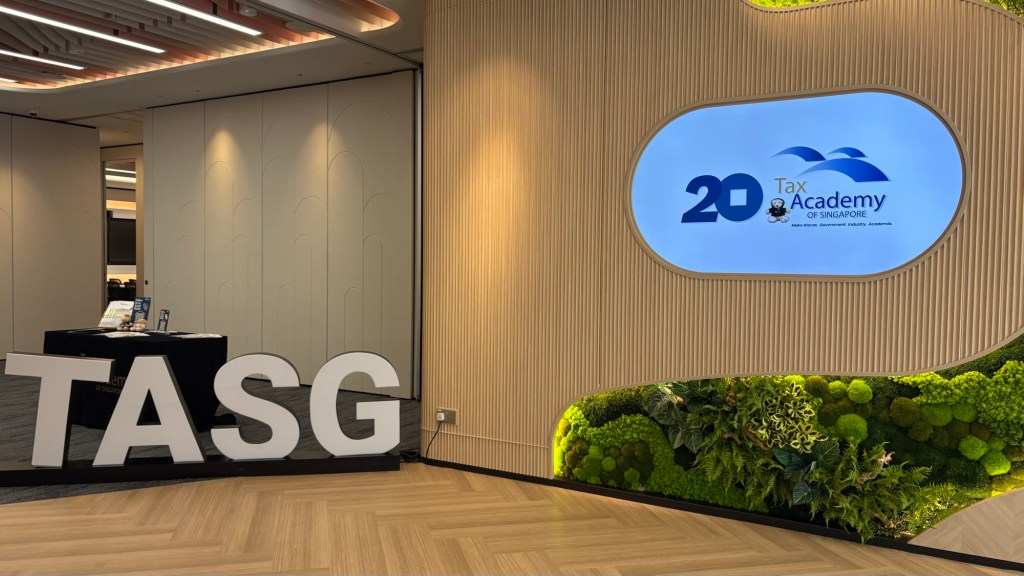
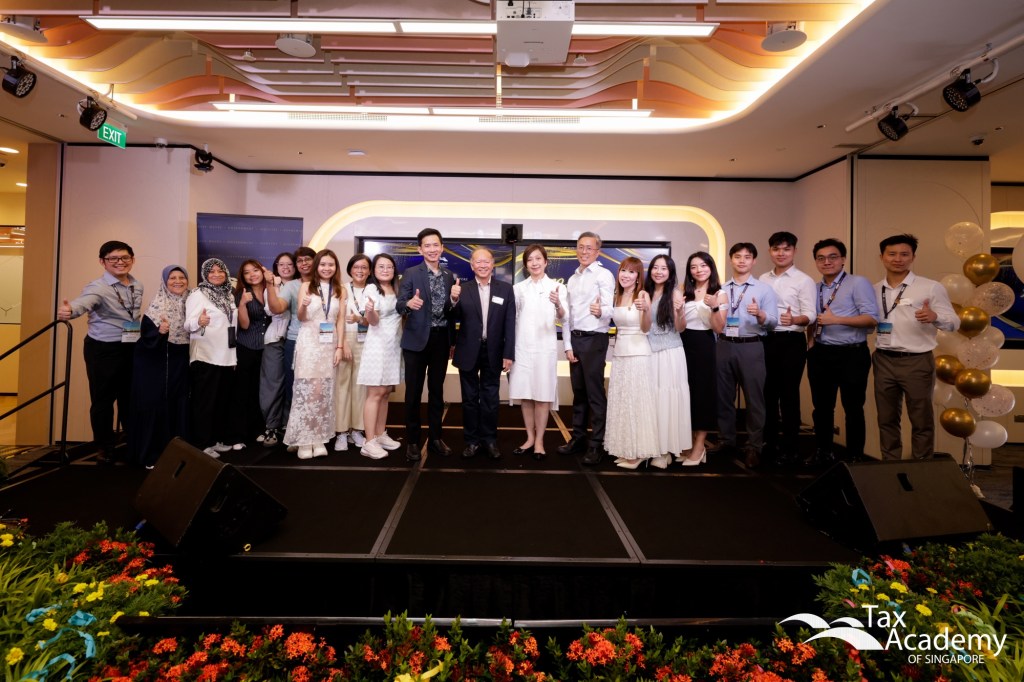
The official opening of the Tax Academy of Singapore Hub marks an important milestone in the organisation’s journey. For many, it represents a new learning environment, purpose-built facilities, and the beginning of an exciting new chapter. As I stood in the new space, however, I found myself reflecting less on the physical move from Basement 1 to Level 1 and more on everything that had happened before we arrived here.
Organisations rarely transform because they occupy a new space. More often, physical spaces become visible symbols of transformations that have already been quietly unfolding for months or even years. The ribbon-cutting ceremony celebrates the outcome, but the transformation itself takes place long before anyone gathers for photographs. It is found in conversations, difficult decisions, experiments that succeed, ideas that fail, and countless small improvements that are almost invisible to those outside the organisation.
Looking back over the past months, I realise that I have been privileged to witness—and contribute to—a remarkable period of change within Tax Academy. During this relatively short period, the organisation embarked on multiple transformation initiatives simultaneously. We moved from Basement 1 to Level 1. We transitioned from renting external training rooms to operating our own learning facilities. We migrated from GovTech’s Isomer Classic to Isomer Studio, refreshed our internal COP by moving to SharePoint, replaced numerous manual Excel-driven processes with a new operational portal, and began reimagining virtual events through Zoom Events.
At first glance, these projects appeared unrelated. One involved facilities, another websites, another data, another learning technologies. Yet as I became involved in more of these initiatives, I slowly realised that they were all expressions of the same underlying question: How can we build a better organisation?
This was perhaps the greatest lesson I learned during my time at Tax Academy.
Looking back, I realised I wasn’t simply focusing on programme management. I was subconsciously working towards organisational change.
Through every new initiative, I had the privilege to observe how strategy, governance, technology, operations, and people continuously influence one another.
It also helped me understand something about myself. Throughout my career, I have found myself drawn towards work that sits at the intersection of multiple disciplines. While each field is interesting in its own right, I have come to realise that what I find most meaningful is understanding how they fit together into a coherent system.
This realisation fundamentally changed how I began approaching my work.
When people hear the word “transformation”, they often think about technology, new software, artificial intelligence, digital platforms, or automation. While these certainly play an important role, I have come to believe that technology is rarely the transformation itself. More often, it simply exposes how an organisation already functions.
Every workflow tells a story. Every spreadsheet exists because someone once solved a problem using the resources available to them. Every policy reflects a balance between innovation, governance, risk and operational reality. Even seemingly inefficient processes often have histories that explain why they exist.
As a result, I found myself asking increasingly different questions. Rather than immediately looking for better software or faster processes, I became more interested in understanding the systems that had produced the current way of working.
Why was this process originally designed this way?
What assumptions were embedded within it?
What problem had it once solved?
If we were building the organisation today, would we design it differently?
These questions rarely produced immediate answers. They did, however, produce better conversations.
Over time, I became convinced that meaningful transformation begins not with solutions, but with better questions.
One of the most unexpected lessons came from rethinking the nature of learning itself.
Like many organisations, professional training can easily become associated with classrooms, trainers and presentation slides. Yet the development of the new Hub created an opportunity to think much more broadly about what the learning experience could become.
Instead of asking how to deliver content, we began asking how to design an experience.
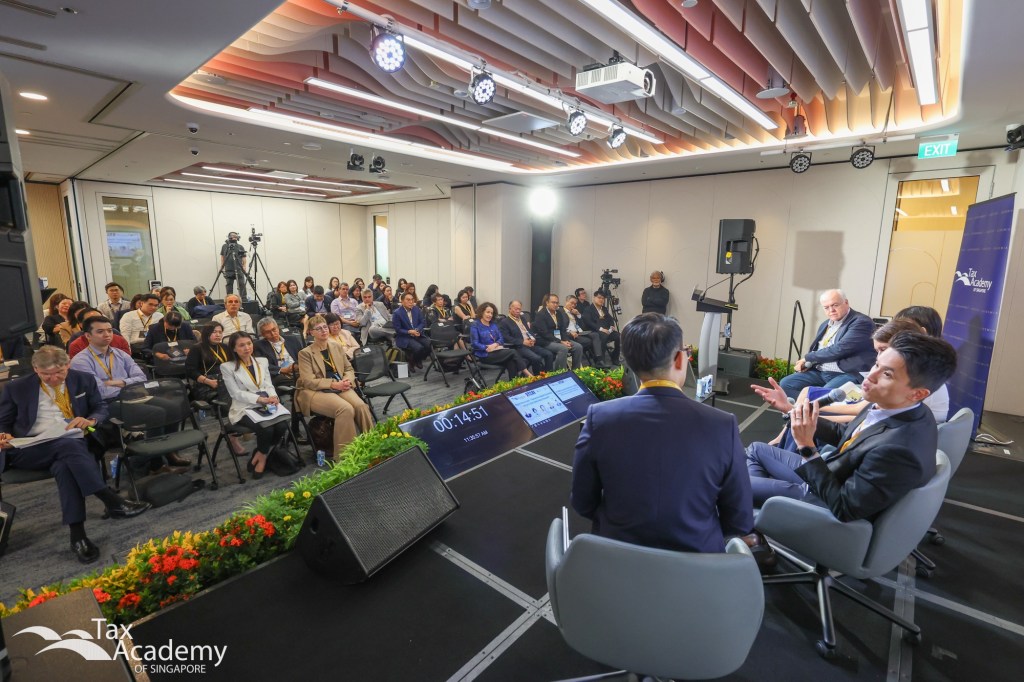
The learner’s journey begins long before the trainer introduces the first topic. It starts during registration. It continues through pre-event communications, the arrival experience, the ambience of the room, the quality of audiovisual systems, the transitions between speakers, the clarity of presentation slides, the integration between physical and virtual participants, networking opportunities, exhibition spaces, and finally, the follow-up after the programme concludes.
Learning, I realised, is not simply the transfer of knowledge.
It is the careful orchestration of hundreds of small moments that together shape how knowledge is transferred from one to another.
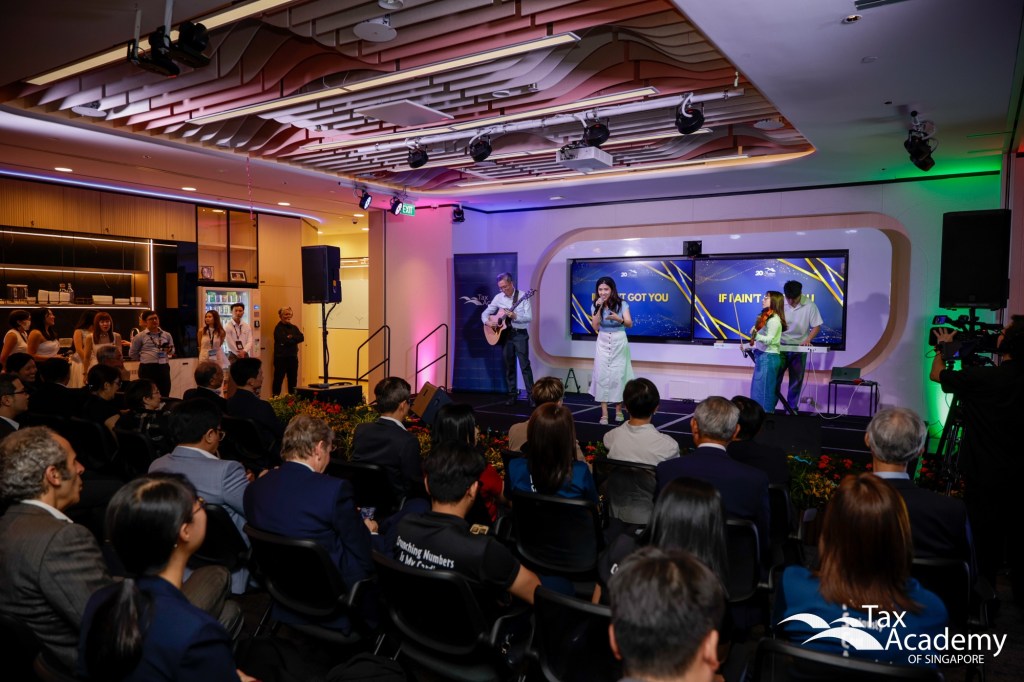
Perhaps this resonated so strongly with me because of my earlier background in technical theatre.
Years ago, I learned that audiences rarely notice seamless lighting transitions, perfectly timed sound cues or carefully coordinated stage management. The purpose of excellent technical production is precisely that it disappears into the background, allowing the audience to focus entirely on the performance itself.
I began to see education in much the same way.
Perhaps great learning environments should function like great theatre—not because they seek to entertain, but because every element quietly works together to support the learner’s experience. The trainer becomes only one part of a much larger system involving operations, facilities, technology, communications and programme design.
This was one of the most enjoyable discoveries of the entire journey. It reminded me that seemingly unrelated experiences in our lives often converge in unexpected and meaningful ways.
If technology was not the most difficult aspect of transformation, then what was?
Without hesitation, I would answer: people.
Early in my career, I assumed that good ideas would naturally be embraced. Experience has taught me otherwise.
Change exists at the intersection of innovation, organisational priorities, governance requirements, existing performance indicators, institutional memory and organisational culture. Every proposed improvement affects someone differently. What appears to one person as progress may appear to another as uncertainty, additional workload or the loss of familiar routines.
Over time, I stopped asking why people resisted change.
Instead, I became curious about what made change difficult.
Sometimes people simply needed time to process new expectations. Sometimes they worried about whether they possessed the necessary skills. Sometimes existing performance metrics rewarded maintaining current processes rather than experimenting with new ones. Sometimes competing priorities made even worthwhile improvements difficult to adopt.
Understanding these perspectives required something that technology could never provide.
Patience.
It required listening before proposing.
Observing before redesigning.
Seeking to understand before seeking to improve.
I also learned that not every proposal should—or even could—be implemented immediately. There were occasions when leadership chose a different direction, or when broader organisational considerations outweighed my own recommendations. Rather than viewing these moments as setbacks, I increasingly came to appreciate them as reminders that leadership often carries responsibilities and constraints that are not immediately visible.
Transformation, I realised, is not about winning arguments.
It is about building shared understanding.
Another unexpected area of learning emerged through organisational development and human resource discussions.
Before joining Tax Academy, I had largely viewed HR through the familiar lenses of recruitment, performance management and staff administration. Gradually, however, I began to appreciate HR as something far more fundamental.
It is, in many ways, organisational architecture.
Every decision about role design influences accountability. Every job description shapes expectations. Every recruitment exercise determines future organisational capability. Every training programme represents an investment in institutional knowledge. Every coaching conversation influences culture. Every decision to redeploy or redesign responsibilities reflects an organisation’s ability to adapt to changing priorities.
Perhaps most importantly, HR is not merely about developing individuals. It is about developing an organisation’s collective capacity to learn.
That perspective has stayed with me long after individual projects concluded.
There remains one observation that continues to stay with me whenever I encounter organisations undergoing transformation.
Manual work.
Perhaps even more so, unnecessary double work.
There is an instinct, particularly among those enthusiastic about digital transformation, to automate immediately. I confess that I have often felt this instinct myself. It genuinely pains me to see capable people spending time on repetitive administrative tasks when technology appears capable of reducing that burden.
Yet experience has repeatedly reminded me to pause before reaching for solutions.
Manual work is rarely the problem.
More often, it is the symptom.
Perhaps a legacy system no longer supports evolving operational needs. Perhaps governance requirements changed over time. Perhaps an earlier attempt at automation proved unreliable. Perhaps no one had the opportunity to redesign the process because more urgent priorities continually intervened.
Every manual process has a history.
Only by understanding that history can meaningful redesign take place.
This has become one of the most valuable habits I have developed.
When I encounter inefficiency today, my instinct is no longer to ask how it can be automated.
Instead, I first ask why it exists.
Only then do I begin thinking about what the future might look like.
One of the ideas that has resonated most deeply with me throughout this journey comes from systems thinking.
No organisation can be understood by looking at individual functions in isolation. Every function is related to another. Technology influences governance. Governance shapes operations. Operations affect culture. Culture determines how willing people are to embrace change. Leadership, in turn, influences every one of these relationships.
The more I became involved across different initiatives, the more I realised that no project ever truly stood on its own. Every decision created ripple effects elsewhere in the organisation. Improving one process often required redesigning another. Introducing new technology meant revisiting governance. Rethinking operations require supporting people through change. Even small improvements often depended on the alignment of multiple teams working towards a common purpose.
Perhaps this explains why I gradually became less interested in individual projects and more interested in understanding how the organisation functioned as a whole. I came to appreciate that lasting transformation is rarely achieved by optimising one department or implementing one new system. Rather, it emerges when the relationships between people, processes, technology and organisational priorities are thoughtfully designed to reinforce one another.
As Tax Academy embarks on this new chapter with the opening of the Tax Academy of Singapore Hub, I look forward to seeing how the organisation continues to evolve. I have no doubt that new technologies will emerge, new programmes will be developed and new challenges will arise. Such is the nature of every organisation committed to continual improvement.
For me personally, however, this season has also been profoundly formative.
Looking back, I realise I was never simply learning how to implement new technologies or deliver transformation projects. I was learning how organisations think, how they adapt, how they learn and, occasionally, why they struggle to change.
It also helped me understand something about myself.
Throughout my career, I have found myself repeatedly drawn towards situations where different disciplines intersect. Technology and governance. Operations and strategy. Communications and analytics. Human behaviour and organisational design.
I have come to realise that this intersection is where I feel most intellectually alive.
If there is one lesson I will carry forward from this chapter, it is that transformation is ultimately not about buildings, platforms or technology. Those are important, but they are not the destination.
Transformation is about creating systems that allow people to do their best work.
It begins with curiosity rather than certainty.
It requires patience as much as innovation.
And perhaps most importantly, it asks us to believe that organisations, like the people within them, are always capable of becoming a little better than they were yesterday.
For that lesson—and for the opportunity to learn it—I remain deeply grateful.
 Sim Chen Xing
Leave a comment