
All my life, I have been taught to excel.
From a young age, I learned the importance of doing well, of achieving beyond what was expected, and of setting myself apart from everyone else. In school, this meant getting good grades. As I grew older, it meant being creative, developing new competencies, and finding ways to distinguish myself from my peers. Because of this, I found myself drawn to the arts in my earlier days while many others gravitated towards the sciences.
In my teenage years, I ventured into media, music, theatre, and film, immersing myself in different forms of artistic expression. Through theatre, in particular, I learned to appreciate the complexity of human emotions, to empathise with characters whose experiences were vastly different from my own, and to understand how stories could be brought to life through the collective efforts of a production team.
For a time, I thought I had found my place.
But the working world had a rather different understanding of excellence.

I gradually discovered that creativity did not necessarily translate into financial stability, and that being different did not guarantee success. I began to wonder whether I had chosen the wrong path, and whether I should have pursued something more conventional.
So I returned to education, pursuing sociology, communications, and eventually a Master’s degree in applied research. Along the way, life brought me through an assortment of industries, from architecture and healthcare to marketing, research, the non-profit sector, and even full-time Christian ministry. Each experience taught me something different. Each offered another perspective through which I could understand the world. Yet, despite all these experiences, something always felt strangely incomplete.
There was a persistent voice somewhere within me, a voice that seemed to belong to my younger self, reminding me that I was supposed to achieve something extraordinary. I had to be different. I had to excel. I had to find something that would finally set me apart.
And so I continued learning, acquiring new skills, exploring unfamiliar disciplines, and searching for that elusive combination of experiences that would make me uniquely valuable. But it never seemed enough.
No matter the effort I put in, there will always be someone more accomplished, someone more knowledgeable, or someone further ahead. With every technological advancement and every emerging tool, there seems to be a never-ending plethora of skills I find myself needing to master. Slowly, the pursuit of excellence gradually became an exhausting race to remain relevant. Over time, I began to wonder whether I had misunderstood what excellence was supposed to mean.
Gradually, I find myself asking if I’m striving to become better because I’m passionate with what I’m doing, or am I striving because I fear falling back. I never found an answer. But in the mundaneness of work, God in all His sense of humour, brought me on a journey of self-reflection.
Today, I had the privilege of having a chat with Pak Danny Septriadi, Co-founder of DDTC at my office at the Tax Academy of Singapore.
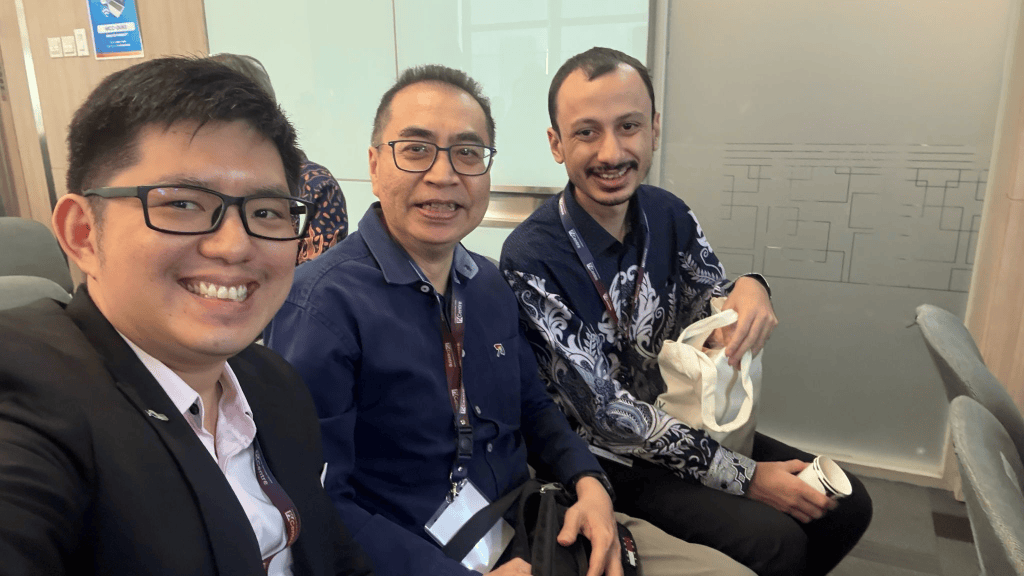
By almost every conventional measure, Pak Danny is an accomplished individual. His remarkable career in taxation, the organisation he has helped build, and his contributions to Indonesia’s tax landscape speak volumes about his professional achievements. With DDTC approaching its twentieth anniversary in 2027, there is certainly much to be proud of. Yet, what struck me during our encounter was not so much his accomplishments, but the conviction behind them.
As I listened to him speak, I began to appreciate his deep concern for the Indonesian people and his unwavering commitment to advancing tax certainty in the country.
To someone outside the profession, tax certainty may sound like a rather technical concern. But behind every uncertainty in the tax system are businesses trying to make decisions about their future, entrepreneurs navigating complex regulations, and families whose livelihoods depend upon the opportunities available to them. An unfair or unpredictable system does not merely create administrative inconvenience. It affects real people, sometimes in profound ways. I believe this is what made Pak Danny’s conviction so compelling.
I reflected upon the countless hours Pak Danny and his team spent researching, writing, advocating, and engaging with policymakers and practitioners. The tireless labour involved in pursuing changes that may take years, perhaps even generations, to materialise. The effort and resources poured into something that does not provide immediate returns. I began to wonder what sustains someone through such an endeavour.
Certainly, there is professional satisfaction in doing meaningful work. Recognition and success may follow. But I wondered whether something deeper was at work, something that transcends personal accomplishments and speaks to the very heart of his conviction. Perhaps, at the heart of it all, is something as simple, yet as profound, as love — love for his country, for its people, and for the generations who would inherit the systems that are being shaped today.
I do not presume to know the entirety of Pak Danny’s motivations from my handful of encounters with him. Yet, what I witnessed reminded me that excellence could be something far greater than the pursuit of personal achievement. Here was someone whose professional knowledge and abilities seemed to have become instruments through which he could contribute towards a better future for others.
As I reflected on this encounter, my thoughts returned to another person whose life has quietly challenged my understanding of excellence.
Michelle Tan, the Executive Director of Gladiolus Place.
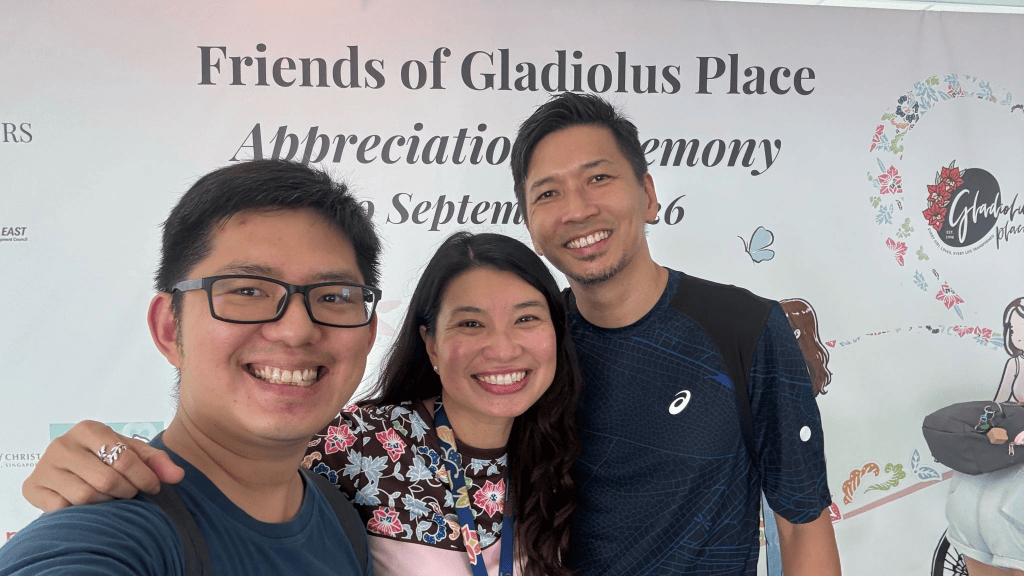
I first came to know Michelle during my time serving with Hope Initiative Alliance. In 2019, Gladiolus Place was one of thirteen charities supported through Our Place in the World, a Bicentennial fundraising initiative. What began as an encounter through a charitable initiative gradually developed into a friendship that has continued over the years.
Recently, I attended the Friends of Gladiolus Place Appreciation Ceremony, where I was reminded once again of the extraordinary work that Michelle and her team have been doing.
Through our conversations over the years, I have come to appreciate the challenges involved in caring for vulnerable young women. There are wounds that do not heal according to a programme timeline, struggles that cannot be resolved through a single intervention, and lives whose restoration requires extraordinary patience and perseverance.
Yet, what moves me most about Michelle is not simply the work she does within Gladiolus Place, but the love that continues long after the Girls have left.
Michelle and her team continue to journey alongside them, celebrating their milestones, supporting them through life’s challenges, and remaining present even after their formal time at Gladiolus Place has ended.
Having spent considerable time in the research sector analysing early-to-middle childhood development myself, I understand the importance of programmes and interventions. These are necessary considerations, particularly when working with children from challenging, and sometimes troubling, backgrounds. Coupled with regulatory requirements and the scarcity of resources in the non-profit sector, these responsibilities become increasingly difficult to juggle.
But Michelle reminded me that some of the most meaningful things we do cannot be adequately quantified like how we measure ROIs.
A programme may conclude. An intervention may be completed. A case may be formally closed. But love does not necessarily end there. There is something profoundly beautiful about people who continue to give themselves to others, not because they are required to, but because the people before them genuinely matter.
This is why Gladiolus Place’s vision, Every Girl Loved, Every Life Transformed, resonates so deeply with me. It reminded me that true transformation begins with love.
As I reflected on Pak Danny and Michelle, I began to recognise something rather remarkable.
Here are two individuals working in vastly different fields, pursuing entirely different forms of excellence. One advocates for greater fairness and certainty within a nation’s tax system, while the other journeys alongside vulnerable young women towards healing and restoration. Yet, beneath these differences, there is something remarkably similar.
Both Pak Danny and Michelle have devoted themselves to causes that extend beyond their own personal interests. Both undertake difficult and often exhausting work because they recognise the value of the people they serve. Their excellence is reflected not merely in what they have accomplished, but in the conviction and love that sustain their labour.
As I reflected on this, I came to the realisation that this was what I had been missing in my own understanding of excellence.
For much of my life, I have been preoccupied with becoming someone extraordinary. I pursued knowledge, accumulated experiences, and developed new competencies in the hope that they would eventually distinguish me from everyone else. But this encounter made me realise that the value of our abilities lies not primarily in how they differentiate us from others, but in what they enable us to give.
I thought about my years in the arts, where I learned to appreciate the emotions and experiences of others. I thought about my education in the social sciences, which taught me to examine the relationships between individuals, institutions, and society. I thought about my experiences across different industries, and the many skills I had tried so hard to acquire.
I have come to realise that these experiences were never meant merely to make me different, but to open my eyes to see the world in a different light. To recognise suffering where others might see only inefficiency. To appreciate the circumstances that shape people’s lives. To understand that behind every policy, system, organisation, and programme are individuals whose experiences matter.
I am reminded of the Apostle Paul’s words in 1 Corinthians 13, where he writes that even the most extraordinary gifts, knowledge, faith, and sacrifices amount to nothing without love.
I have read this passage countless times. Yet, I wonder whether I have truly appreciated its implications for my own pursuit of excellence. What is the value of extraordinary knowledge if it does not teach me to love? What is the significance of remarkable accomplishments if they serve only to elevate my own standing?
This is not to suggest that ambition or professional success is inherently wrong. Neither do I believe that we should abandon our desire to learn, grow, and pursue meaningful accomplishments. Rather, I’m alluding to the fact that the distinction lies in what ultimately drives us.
When excellence becomes a means of establishing our own worth, its pursuit can become exhausting. There will always be someone more accomplished, another milestone to achieve, or another opportunity to prove ourselves. But when excellence is driven by love, the same labour takes on an entirely different meaning.
In love, we pursue knowledge because there are people worth understanding. We develop our abilities because there are problems worth solving. We persevere through difficulties because there are lives worth caring for and futures worth working towards.
And perhaps this is where I begin to appreciate the quiet ministries of Pak Danny and Michelle.
Much of this labour will never receive the recognition it deserves. Some acts of love may never be noticed. Some prayers may never be known to the people for whom they are offered. Some sacrifices may never produce outcomes that can be neatly documented or celebrated. Yet, all of these matter.
There is much goodness in this world that is the cumulative result of such quiet faithfulness.
Consider the many lives that have been transformed because someone chose to remain when it would have been easier to leave. Consider how the future might be made better because someone is willing to labour towards a change they may never personally witness. Consider the extraordinary things that may emerge from the simple conviction that another person’s life matters.
I have spent so much of my life trying to distinguish myself from everyone else. Yet, some of the most extraordinary people I have encountered seem far less preoccupied with the question of their own extraordinariness.
They have found something worth loving and they have devoted themselves to it.
Perhaps true excellence begins there, in the quietness of a heart that has found something worth giving itself to. Not because the world is watching. Not because recognition is assured. But because love, in itself, makes the labour worthwhile.
And in that quiet, sometimes lonely, and often unseen pursuit, the work of their hands, with a touch of love, becomes exceedingly beautiful.


Leave a Reply