Reflections on artificial intelligence, the changing expectations of workers and leaders, and why trust may ultimately determine how far humanity progresses.
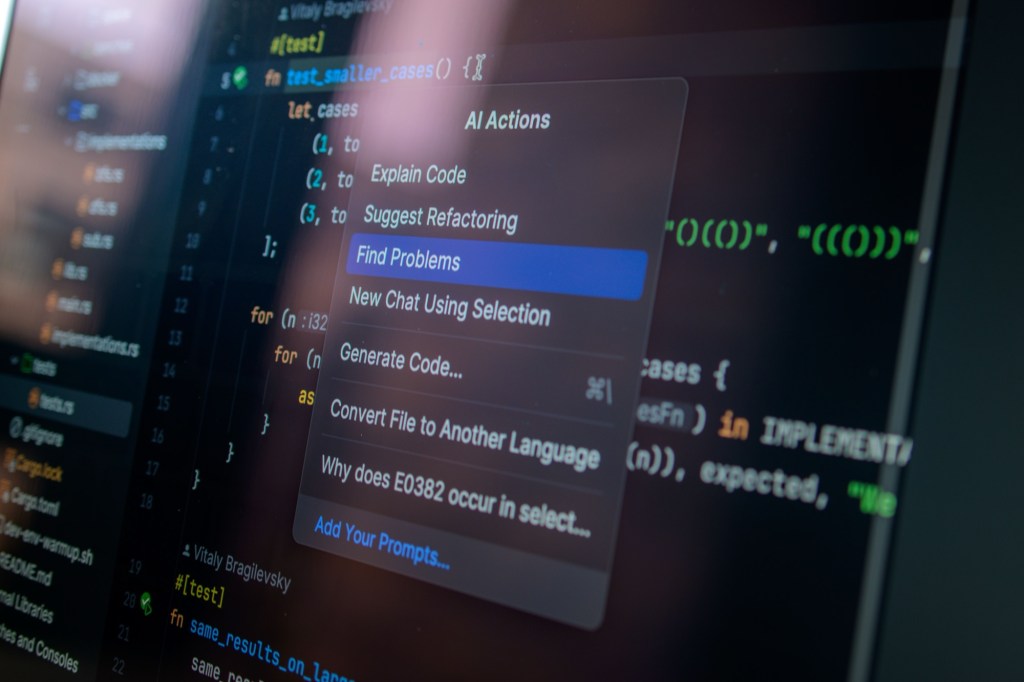
Over the past few weeks, I have been experimenting with building artificial intelligence (AI) agents for myself, while simultaneously exploring how similar technologies could be deployed within an organisation.
What started as a fairly straightforward curiosity about building a personal AI assistant has gradually evolved into something much bigger. I began thinking about what it would mean to have my own Chief of Staff. Not a human Chief of Staff, but an AI agent capable of coordinating other specialised agents—researchers, analysts, planners, developers, and perhaps eventually even systems capable of acting in the physical world. The possibilities are fascinating. Yet, the more I experimented, the more I realised that the real challenge was not necessarily getting the AI to perform a task. It was understanding how different systems should communicate, what information they should have access to, what decisions they should be permitted to make, and where human oversight should remain. Then, during a meeting with some distinguished guests yesterday, something clicked. We were discussing cross-border transactions, data cleanliness, and the importance of cooperation between policies, systems, and governance structures. And it struck me.
Building an effective AI ecosystem requires remarkably similar considerations.
Data must be trustworthy. Systems must communicate. Different stakeholders must agree on common rules. Information must move across boundaries without compromising security, confidentiality, or accountability. Suddenly, my little experiments with AI agents seemed to point towards a much larger question.
If AI is really becoming as capable as everyone claims, what will this mean for the future of work—not just for individual employees, but for organisational leaders, governments, and society as a whole?
The Entry-Level Worker: From Task Executor to Systems Architect
For generations, our education and employment systems have largely operated on a familiar assumption. People acquire specialised knowledge, enter the workforce, and apply that knowledge to accomplish tasks assigned to them.
A fresh graduate might prepare reports, analyse spreadsheets, conduct research, develop software, or support administrative processes. With experience, they eventually progress into positions requiring greater judgement, coordination, and strategic responsibility. But AI potentially disrupts this progression.
Consider what is already possible. An individual with relatively limited programming experience can now use AI to develop websites, build applications, analyse datasets, automate workflows, and connect different software services. They may not fully understand every line of code being generated, but they can increasingly translate an idea into a functional product.
Now imagine taking this a step further. Instead of merely asking an AI to perform individual tasks, the worker begins designing an entire workflow involving multiple AI agents. One agent conducts research. Another analyses the findings. A third develops a solution. A fourth reviews the output for quality and compliance. The human orchestrates the process.
The implications are significant.
The entry-level worker of tomorrow may no longer be evaluated primarily on how well they execute tasks, but on how effectively they design, supervise, and improve systems that execute those tasks.
And this requires a fundamentally different set of competencies.
Technical expertise will remain important. In fact, I would argue that domain expertise becomes even more critical when AI can produce convincing answers that may nevertheless be incorrect.
An accountant must still understand accounting. A researcher must still understand research methodology. A programmer must still understand software architecture. Otherwise, how would they know whether the AI has produced something reliable?
Increasingly, individuals may also need to understand workflow architecture, system integration, data governance, cybersecurity, and the appropriate boundaries of automation. They need not all become software engineers. However, they should understand enough about the systems they use to recognise their limitations, evaluate risks, and ask the right questions. Even simple low-code or no-code solutions require an appreciation of how information flows, who can access it, and what happens when something goes wrong. This is especially important when AI agents begin interacting with sensitive organisational information or executing actions on behalf of users.
The ability to build something is not the same as the ability to build it responsibly. The future graduate may therefore need to combine the technical knowledge of a specialist, the systems thinking of an architect, and the judgement of a manager, all before they have even held their first management position.
What an extraordinary shift in expectations.
Senior Management: What Happens When Everyone Thinks Like a CEO?
This brings me to a more provocative question.
What happens to organisational leadership when entry-level employees begin operating like miniature CEOs?
Imagine a fresh graduate entering the workforce with an AI Chief of Staff. That Chief of Staff coordinates a small army of specialised agents capable of conducting market research, preparing business cases, developing prototypes, monitoring performance indicators, and recommending strategic actions. Suddenly, that individual possesses access to capabilities that might previously have required an entire department.
Of course, possessing these capabilities does not automatically confer the wisdom or accountability of an experienced leader. But it does narrow the gap between the tools available to senior management and those available to junior employees. And that is where things become interesting.
For decades, organisations have relied on hierarchical structures partly because information, expertise, and decision-making capacity were distributed unevenly. Senior management set direction. Middle management translated strategy into execution. Operational staff carried out tasks.
But what happens when an individual can coordinate much of that execution independently? Will organisations still require the same number of managerial layers? Will leadership become less about supervising work and more about determining which work ought to be done? And perhaps most importantly, if a fresh graduate can use AI to analyse markets, generate strategic options, and coordinate execution, what additional value must a CEO bring?
I suspect the answer lies in the things that technology cannot so easily provide — Wisdom, judgement, moral responsibility, institutional trust, and the ability to navigate competing interests and make difficult decisions under uncertainty.
Senior leaders may need to become even better at identifying opportunities that others have not recognised, asking questions that others have not considered, and bringing people together towards a common purpose. They will also need to understand AI themselves.
It would be rather difficult for a leader to establish an AI-enabled organisational strategy without understanding what agentic systems can accomplish, how they should be governed, or what risks they introduce. Leadership cannot simply delegate all technological understanding to an IT department.
At the same time, AI could fundamentally change how organisations approach recruitment. If one person, supported by AI agents, can perform work previously requiring several employees, should organisations continue hiring according to traditional headcount models? Would we begin hiring individuals based on the ecosystems of AI capabilities they can effectively manage? Could a small team of highly capable individuals outperform a much larger organisation? And what happens when these individuals realise that they do not necessarily need an employer to access the infrastructure required to deliver professional services? Perhaps some will choose to establish their own businesses. Perhaps others will prefer to work as independent professionals, engaging organisations through project-based partnerships or business-to-business contracts.
Employment will certainly not disappear overnight. Organisations provide capital, legal structures, shared resources, mentorship, accountability, and stability that an individual cannot always replicate. But I do wonder whether the traditional distinction between employee and entrepreneur will become increasingly blurred.
When individuals can command capabilities once reserved for organisations, organisations must rethink what makes belonging to them valuable.
The Wider Society: AI Needs Space to Grow
There is another dimension to this transformation that I find particularly intriguing: Space.
I was reminded of the biblical account of Abram and Lot in Genesis 13. Both had accumulated substantial possessions, including livestock and households. Eventually, the land could no longer sustain them together, and disputes arose between their herdsmen. Abram proposed that they separate, allowing both households the space necessary to flourish.
The story is about more than physical land. It also illustrates how growth can create new pressures on shared resources, requiring people to rethink arrangements that previously worked. I wonder whether something similar might emerge as AI becomes more deeply integrated into society.
Today, my own experiments remain relatively modest. I might build a personal assistant, connect a few tools, and experiment with an automated workflow. Someone else might already be operating a sophisticated network of agents, coordinating business operations with relatively little human intervention. Still others may eventually develop AI systems that operate robots, machinery, and other physical infrastructure.
We are at very different stages of technological maturity. And each stage requires different resources.
Someone experimenting with AI on a personal computer has different infrastructure requirements from an entrepreneur running hundreds of agents, or an organisation deploying AI across thousands of users. As these systems mature, their requirements for computing power, electricity, cooling, connectivity, storage, and physical infrastructure may expand.
Imagine a future where individuals begin with a personal laptop or Mac mini, before gradually moving towards dedicated servers and shared computing infrastructure. Some may eventually require substantial private or commercially hosted computing capacity. Not everyone will need their own data centre, of course. Shared cloud infrastructure and increasingly efficient models may make personal ownership unnecessary for many use cases. Nevertheless, the broader point remains.
The growth of AI will place new demands on how societies allocate both digital and physical resources.
This is where real estate, energy policy, urban planning, telecommunications, and national infrastructure strategies begin to intersect with AI adoption. And if AI-enabled robotics becomes commonplace, we may face additional questions about how physical environments should be designed to accommodate increasingly autonomous systems.
But perhaps the more important need for space is not physical. It is developmental. People need space to experiment. Space to fail. Space to learn how to work with AI before they can fully trust it. Space to discover new possibilities that may not have been apparent when they first began.
Organisations, too, need space to explore without expecting every experiment to deliver immediate financial returns. Governments must create environments that encourage innovation while safeguarding the public interest.
The analogy with Abram and Lot is not that everyone must separate and build their own independent AI empire. Rather, it is that growth requires us to reconsider how resources, boundaries, and responsibilities are shared.
If AI is to become a foundational part of society, we must begin preparing the space in which it can flourish.
Trust: The Most Important Infrastructure of All
Yet all these technological possibilities depend on something far less tangible — Trust.
I find it interesting that many of us are perfectly comfortable storing confidential documents on Google Drive, Microsoft SharePoint, or other cloud-based services. We upload personal information, financial records, business plans, and sensitive documents, often without giving much thought to the infrastructure operating behind the scenes. But mention connecting these same documents to a large language model, and suddenly people become apprehensive.
Why?
Some of these concerns are entirely legitimate. AI introduces new forms of risk.
Depending on the provider, product, and configuration, submitted data may be subject to different retention, processing, and model-training arrangements.
An agent with access to multiple systems might inadvertently expose information beyond its intended scope. Malicious actors might exploit prompt injection, manipulate the instructions an AI receives, or attempt to make an agent disclose sensitive information or perform unauthorised actions. An AI system might also generate inaccurate information with considerable confidence. But it is important to distinguish between the different risks rather than treating all AI systems as equally unsafe.
After all, we have already developed ways to manage similar risks in conventional cloud computing. Enterprise AI offerings, for instance, may provide contractual data protections, restrictions on model training, access controls, and other security measures. While these safeguards cannot eliminate every risk, they demonstrate that AI adoption need not be an all-or-nothing decision between complete trust and complete avoidance.
Perhaps, then, we are asking the wrong question. Rather than simply asking whether AI can be trusted, we should be asking:
Under what conditions, with what safeguards, and to what extent should we trust AI?
After all, we did not develop trust in cloud computing merely because cloud providers promised to behave responsibly. We developed governance frameworks, security standards, contractual protections, audits, access controls, and regulatory mechanisms.
Trust was gradually institutionalised. Why should AI be any different?
If anything, AI requires even more careful governance because these systems do not merely store or retrieve information. Increasingly, they can interpret information, make recommendations, and initiate actions. The more autonomy we delegate, the more important it becomes to define boundaries. What information may an agent access? What decisions may it make independently? When must a human approve an action? Who is accountable when something goes wrong? And how do we ensure that information obtained for one purpose is not misused for another? These are not merely technical questions. They are questions about organisational governance, law, ethics, and human responsibility.
There is also a deeper philosophical dimension.
I sometimes wonder what the world might look like if humanity were genuinely united in seeking collective prosperity. Imagine technology companies cooperating more openly to develop interoperable systems. Imagine nations working together to strengthen cybersecurity rather than exploiting technological vulnerabilities for strategic advantage. Imagine individuals developing AI systems to improve lives rather than manipulate, exploit, or harm others.
In such a world, perhaps we would spend less time constructing barriers against malicious behaviour and more time exploring what technology could accomplish.
Of course, this is an idealistic vision. Human history gives us little reason to assume that competition, selfishness, or conflict will simply disappear. Indeed, even well-intentioned people can disagree about what constitutes the common good. That is precisely why robust governance remains necessary.
Trust cannot depend on everyone being good. It must be supported by systems that remain safe even when some people are not.
An AI agent does not need to trust its user in the human sense, nor should a user blindly trust an agent. Instead, we need systems designed around clearly defined permissions, verifiable behaviour, accountability, and meaningful human oversight. Trust should be earned, tested, and continuously maintained.
Ultimately, the greatest challenge may not be making AI more intelligent. It may be making the ecosystem surrounding AI sufficiently trustworthy for its intelligence to be used responsibly.
Governments: From Regulating Technology to Enabling a New Society
Governments will increasingly need to rethink their role in an AI-enabled society.
Traditionally, public policy has focused on regulating industries, developing infrastructure, protecting citizens, and creating economic opportunities. These responsibilities will remain. But AI introduces a new layer of complexity.
An individual in one country may develop an agent using a model hosted in another country, connect it to services operated across several jurisdictions, and process information subject to multiple regulatory frameworks. Who is responsible for ensuring compliance? Which jurisdiction’s data protection requirements apply? How should systems communicate when their security standards, legal obligations, and governance structures differ? And how do we enable cross-border innovation without compromising national security or individual privacy?
These questions are not entirely new. International trade, financial transactions, and digital services have faced similar challenges for years. But autonomous AI systems may increase both the speed and the scale at which information moves and decisions are executed. That was what made my recent conversation about cross-border transactions so thought-provoking.
The same principles of data cleanliness, interoperability, cooperation, and governance that facilitate trusted economic transactions may also become foundational to future AI ecosystems. Governments may therefore need to think beyond simply controlling which AI systems people can use. They should also consider how to create conditions in which responsible innovation can flourish. This includes access to computing infrastructure, education, cybersecurity capabilities, interoperable standards, and opportunities for individuals and businesses to experiment. It also requires recognising that not everyone will benefit equally from technological change. Those with resources, technical knowledge, and supportive environments may advance rapidly. Others may struggle to adapt.
If AI becomes a major source of productivity and economic opportunity, unequal access to these capabilities could deepen existing social and economic divides. The challenge for governments is therefore twofold. They must protect society from the risks of AI while ensuring that the opportunities it creates are not reserved for a privileged few.
Good governance should not merely prevent harm. It should also make responsible progress possible.
The Human Challenge: What Happens When People Stop Wanting to Think?
Despite my excitement, there is one aspect of this transformation that genuinely troubles me. It has less to do with the technology and more to do with our attitudes towards work.
I have heard friends and colleagues say things along the lines of:
“I don’t want to think anymore.”
They would rather go through the motions, complete familiar tasks, and avoid having to confront new challenges.
I understand the sentiment. Work can be exhausting. People have personal responsibilities, competing priorities, and different capacities for change. Not everyone wants to become an entrepreneur, a technologist, or a senior leader. Nor should they have to.
There is dignity in routine work, and there is nothing inherently wrong with wanting a stable and manageable life. But I cannot help feeling troubled when the desire for stability becomes a refusal to learn. The world is changing whether we welcome it or not. Tasks that once required substantial human effort may increasingly be automated. Jobs may be redesigned. Some roles may disappear, others may emerge, and many will evolve in ways we cannot yet fully anticipate.
I do not believe it is fair to suggest that everyone displaced by AI will have failed to adapt. Economic transitions can be painful even for capable and hardworking people, and not everyone has equal access to the resources needed to reskill.
Nevertheless, I worry about those who respond to technological change by disengaging entirely. Those who refuse to explore. Those who decide that learning is no longer necessary. Those who see AI exclusively as a threat rather than considering how it might become a tool.
Because while we cannot individually control the direction of technological development, we can exercise some agency over how we respond. And I would much rather see people empowered to shape their future than resigned to having it shaped for them. Perhaps this is where our understanding of education and professional development must change. Learning can no longer be something that ends upon graduation. Nor can professional competence be defined solely by mastery of a fixed collection of tasks.
We must cultivate curiosity, adaptability, critical thinking, and the ability to continuously acquire new knowledge.
Ironically, as AI becomes increasingly capable of producing answers, the human ability to ask meaningful questions may become even more valuable. The question is no longer simply whether AI can do our work. It is whether we can continue growing beyond the work we already know how to do.
Towards a “Star Trek” Future
I have always been fascinated by the vision of humanity presented in Star Trek. Not necessarily the spaceships or futuristic gadgets, although those are certainly appealing. What fascinates me more is the underlying idea of a civilisation that has developed the technological and social capabilities to pursue goals beyond mere economic survival.
A society where people can devote themselves to discovery, exploration, learning, scientific progress, and the betterment of humanity. A world where technology increasingly takes care of the mundane, allowing people to pursue higher purposes.
Of course, the Star Trek universe is fictional, and its apparent abundance depends on technological breakthroughs and social arrangements that we have not achieved. AI alone will not eliminate scarcity, inequality, or human conflict. But perhaps it can move us a little closer to that vision.
Imagine a society where administrative work no longer consumes enormous amounts of human time. Where scientific researchers can test ideas faster. Where educators can provide more personalised guidance. Where healthcare professionals can dedicate greater attention to their patients. Where small businesses can access sophisticated capabilities without requiring substantial capital or large teams. And where individuals can spend more of their lives pursuing meaningful work, relationships, creativity, service, and discovery. That is the future I find exciting.
Not a future where humans become obsolete. But one where technology expands the possibilities of what it means to be human. Yet this future is far from guaranteed.
Technology can liberate, but it can also concentrate power. AI can lower barriers to entrepreneurship, but it can also increase competitive pressures. Automation can free people from repetitive tasks, but the resulting productivity gains may not automatically translate into shorter working hours or better livelihoods. These outcomes depend on the choices we make as individuals, organisations, and societies. They depend on how we distribute opportunities, how we govern powerful systems, and what we ultimately decide technological progress should serve.
So, What Does This Mean for Us?
The more I reflect on my experiments with AI, the more convinced I become that we are looking at something far more significant than another productivity tool. We may be witnessing a fundamental reconfiguration of how work is organised.
For individuals, this means moving beyond executing tasks towards understanding problems, designing systems, and exercising judgement.
For organisational leaders, it means rethinking strategy, organisational structures, and what leadership ought to contribute when employees possess unprecedented technological capabilities.
For governments, it means building the infrastructure, policies, and trusted environments necessary for innovation to flourish without leaving people behind.
And for humanity, it means confronting an uncomfortable but necessary question.
If technology can increasingly do what we have traditionally defined as work, what should we choose to do with our lives?
I do not have a definitive answer. My own journey with AI is still very much an experiment. I am still learning how to build effective agents, how to integrate systems, and how to balance technological possibilities against practical limitations. And perhaps that is precisely why I find this moment so exciting. There is so much that we do not yet know. So much that remains to be discovered. And so many possibilities that have yet to be imagined.
But I believe one thing is becoming increasingly clear.
The future will not simply belong to those who know how to use AI. It will belong to those who know what is worth doing with it, how to do it responsibly, and why it matters.
I hope we will not allow our fear of change to overshadow our capacity for growth. I hope we will develop enough wisdom to govern the technologies we create. And I hope that, rather than using AI merely to do more of what we have always done, we will use it to imagine and build a better world.
Perhaps then, we might finally find ourselves a little closer to that Star Trek future. One where humanity is no longer content merely to keep the machinery of society running. But is free to pursue something greater — to explore, to discover, and to serve.
And, in the words of a familiar vision of the future, to boldly go where no one has gone before.


Leave a Reply